Powerline technology (also known as PowerLAN, PLC, or dLAN) uses your home’s existing electrical wiring to transmit internet data. By plugging adapters into standard power outlets, it turns every electrical socket into a potential high-speed internet port, bypassing the need for complex Ethernet cables or Wi-Fi.
How Powerline Works
To build a Powerline network, you need a minimum of two adapters:
- The Transmitter: You plug the first adapter into a wall outlet near your router and connect them using a standard Ethernet cable. This device modulates internet data into a carrier frequency that travels through your home’s electrical lines.
- The Receiver: You plug the second adapter into a wall outlet in another room. This adapter demodulates the signal back into internet data, allowing you to plug a computer, TV, or gaming console directly into it via an Ethernet cable. Many models also broadcast a Wi-Fi signal to connect mobile devices.
Key Advantages
- Extended Coverage: It is ideal for multi-story homes or rooms with thick walls where Wi-Fi signals struggle to penetrate.
- No New Wiring: It utilizes infrastructure already in place, avoiding the cost and effort of running LAN cables through walls.
- Secure Connections: Data traveling across your wiring system is typically protected by robust encryption protocols, ensuring your connection remains private.
Important Limitations
- Performance Variance: Because electrical wiring is not designed specifically for data transmission, speeds and stability can vary.
- Interference: Performance is heavily dependent on your home’s electrical infrastructure. Large household appliances can sometimes cause interference and degrade connection speeds.
- Circuit Dependency: For the adapters to communicate, they generally need to be on the same electrical phase or circuit board.
-
 Networking Products
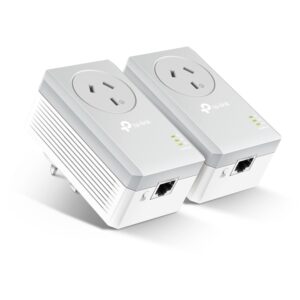
TP-Link TL-PA4010P-KIT
Read moreTP-Link TL-PA4010P-KIT AV600 Passthrough Powerline Starter Kit – Comes with 2* Units – Carries Data Over Electrical Line