
A Request to Exit (REX or RTE) device is a mechanism used in access control systems to safely unlock a door from the inside. It signals the system to temporarily release the door’s lock—such as a magnetic lock or electric strike—or bypass a door alarm so you can exit without triggering a security breach.
Why Are They Used?
Life safety and building codes require a reliable balance between security (preventing unauthorized entry) and safety (allowing people to leave a building quickly in an emergency, also known as “free egress”). REX devices ensure that occupants can easily open a secured door from the inside without needing special credentials, even if the building’s power fails.
Common Types of REX Devices
- Motion Sensors: Typically mounted above the door, these infrared detectors sense when someone is approaching and automatically trigger the door to unlock for hands-free egress.
- Push Buttons: Manual pushbuttons or crash bars are often mounted near the door. When pressed, they send a signal to release the lock.
- Touchless Sensors: Using microwave or infrared technology, these devices allow users to wave their hand near a sensor to break the circuit and trigger the release without making physical contact.
How They Work With the System
When triggered by movement or a button press, the REX device interrupts power to the locking hardware or sends a direct signal to the security panel. This unlocks the door for a specific amount of time, allowing you to walk out. Once the door closes and the timer expires, the door automatically re-engages and secures again.
Requirements for Magnetic Locks
Because electromagnetic locks (mag locks) require power to stay locked, fire codes mandate that doors using them must have failsafe egress methods. In many jurisdictions, this requires two forms of exit:
- A primary motion sensor or crash bar that cuts power to the lock upon approach.
- A secondary backup, such as a push-to-exit button.
-
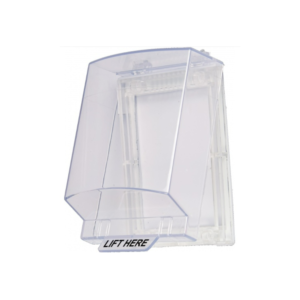 Access Control
DFM WEC140
Read moreDFM WEC140 Clear Polycarbonate Protective Cover For Access Control Exit Devices

-
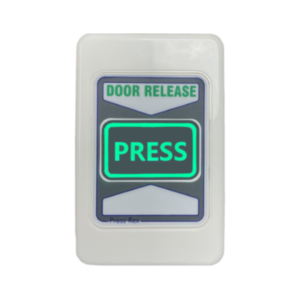 Access Control
Trojan Press Rex G-G-WP
Read moreTrojan Press Rex G-G-WP Outdoor IP55 Rated Weatherproof Press To Exit Unit – Used in Electronic Access Control – Backlit – Supports 10~30VDC Input – 2 Sets of N/O & N/C Outputs

-
 Access Control
Trojan Prox Rex-WP
Read moreTrojan Prox Rex-WP Outdoor IP55 Rated Weatherproof Touch To Exit / Request To Exit Unit – Used in Electronic Access Control – Supports 9~16VDC Input – 2 Sets of N/O & N/C Outputs
-
Access Control
Trojan Press Rex G-G
Read moreTrojan Press Rex G-G Press To Exit Unit – Used in Electronic Access Control – Backlit – Supports 10~30VDC Input – 2 Sets of N/O & N/C Outputs
-
Access Control
Trojan Prox Rex
Read moreTrojan Prox Rex Touch To Exit / Request To Exit Unit – Used in Electronic Access Control – Supports 9~16VDC Input – 2 Sets of N/O & N/C Outputs